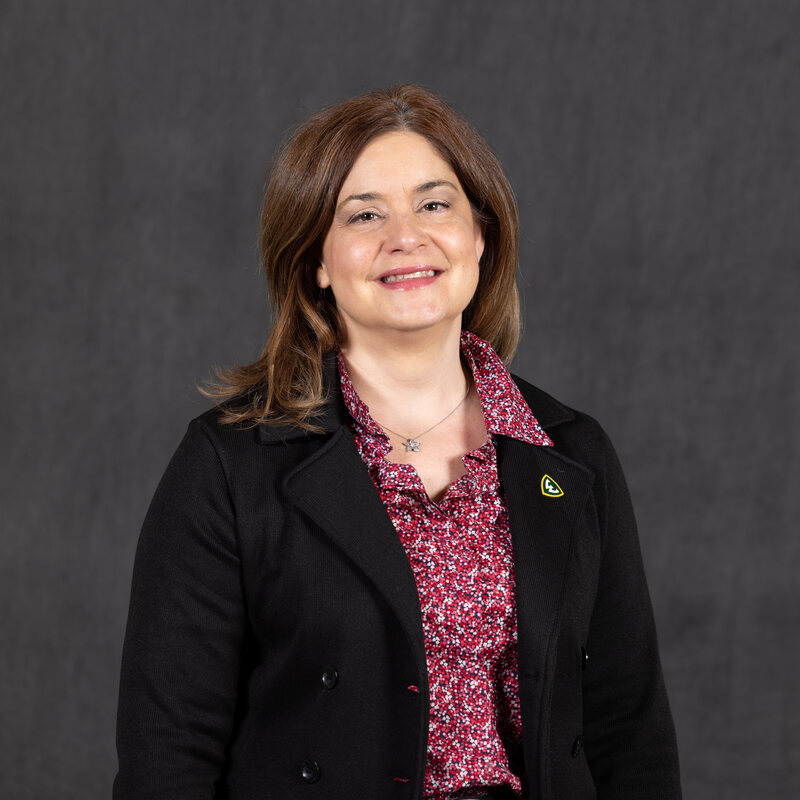
April Carcone
Administrative title
Professor, ResearchOffice address
Integrative Biosciences Building (iBio) #3128, 6135 Woodward, Detroit, MI 48202
Office phone
313-577-1057Biography
Dr. Carcone is a member of the Behavioral Sciences Division of the Department of Family Medicine and Public Health Sciences. Dr. Carcone is a social worker by training with over 20 years experience in behavioral health research. Her research has three main foci. First is the study of patient-provider communication in clinical contexts with a specific emphasis on examining the mechanisms of effect in Motivational Interviewing. Second is the development and testing of behavioral interventions to improve health outcomes with an emphasis on pediatric and emerging adults with chronic illnesses, including obesity, type 1 diabetes, asthma, and HIV. And, finally, the use of implementation science to study the translation of efficacious interventions from academia to the real world.
Please see Dr. Carcone's CV.
Education training
BA Sociology, University of Michigan
MSW, University of Michigan
PhD, Wayne State University
Links of interest
Research
Current Projects:
Family mHealth Intervention to Improve Health Outcomes in Black Youth with Type 1 Diabetes: A Multi-Center Randomized Controlled Trial
The goal of this research is to collaborate with community advisory boards to adapt an existing intervention to add a component to help families optimize their diabetes-related interactions and test the efficacy of the adapted intervention to improve youth glycemic control, improve diabetes-related family relationships and reduce caregiver diabetes-related diabetes distress in a multi-center, randomized controlled trial.
Neural Conversational Agent for Automated Weight Loss Counseling
The goal of this research is to develop an artificial intelligence powered agent to engage patients in weight loss conversations using Motivational Interviewing.
Asthma and technology in emerging African American adults (The ATHENA Project) (R01NR019566)
The goal of this research is to use the multiphase optimization strategy to test the efficacy of several eHealth intervention components to improve asthma outcomes among emerging adults.
ACHIEVE GreatER: Addressing Cardiometabolic Health Inequities by Early PreVEntion in the Great LakEs Region
The goal of this research is to reduce cardiometabolic health disparities and improve lifespan among Blacks living in Detroit and Cleveland through community health worker intervention and training early stage investigators and trainees in community-based participatory research methods.
Improving Diabetes Health in Emerging Adulthood through an Autonomy Support Intervention
The goal of this study is to test a multicomponent autonomy support intervention to improve metabolic control among older adolescents and emerging adults (16-25) with poorly controlled (HbA1c≥9. 0%) type 1 diabetes.
Publications
2025 Publications
Towner E, Dailey R, Idalski Carcone A, Crittenden B, Apatira S, Young K, Harris D, Vaquera A, Salazar R, Jordan P, Thompson H, Langford A, Opara I, Ellis D, Levy P. (in press). Building Community Research Capacity to Address Cardiovascular Health Disparities. American Journal of Public Health.
2024 Publications
Waters E, Maki J, Ackerman N, Idalski Carcone A, Ruiz S, Ehrhardt M, Johnson A, Griffith SA, Hudson MM. (2024). Supporting cardiomyopathy screening behavior in adult survivors of childhood cancer: A web-based eHealth motivational interviewing-framed pilot intervention. Journal of Cancer Survivorship. doi:10.1007/s11764-024-01724-x.
Kotov A, Idalski Carcone A, Kuhl E. (2024). Neural Conversational Agent for Weight Loss Counseling: Protocol for the Implementation and Feasibility Study. JMIR Research Protocols;13:e60361. doi: 10.2196/60361
Idalski Carcone A, Holtz B, Reardon M, Vesey D, Ellis DA, Parks M. (2024). Meeting the Needs of Emerging Adults with Type 1 Diabetes Living in a Rural Area with Mobile Health Interventions: A Focus Group Study. JMIR Formative Research,8(1),p.e55650. PMID: 39110496
Ruiz S, Maki J, Ackermann N, Hudson M, Ehrhardt M, Idalski Carcone A, Waters E. (2024). Translating a motivational interviewing intervention for childhood cancer survivors into an eHealth tool: A user-centered design process. Translational Behavioral Medicine: 14(6), p. 359-367. doi:10.1093/tbm/ibae014. PMID: 38648182.
Knauft K, Jacques-Tiura A, Idalski Carcone A, Evans MA, Weissberg-Benchell J, Buggs-Saxton C, Boucher-Berry C, Miller JL, Drossos T, Dekelbab MB, Ellis DA. (2024). The Moderating Role of Diabetes Distress on the Effect of a Randomized eHealth Intervention on Glycemic Control in Black Adolescents with Type 1 Diabetes". Journal of Pediatric Psychology, jsae033. doi:10.1093/jpepsy/jsae033.
Ellis D, Carcone A, Templin T, Evans M, Weissberg-Benchell J, Buggs-Saxton C, Boucher-Berry C, Miller J, Drossos T, Dekelbab M. (2024). Moderating Effect of Depression on Glycemic Control in an eHealth Intervention Among Black Youth With Type 1 Diabetes: Findings From a Multicenter Randomized Controlled Trial. JMIR Diabetes;9:e55165. doi: 10.2196/55165
Shukla M, Idalski Carcone A, Mooney M, Kannikeswaran N, Ellis D. (2024). Evaluating Barriers and Facilitators to Healthcare Providers’ Use of an Emergency Department Electronic Referral Portal for High-risk Children with Asthma using the Theoretical Domains Framework. Journal of Asthma. doi: 10.1080/02770903.2023.2257318.
Ellis DA, Idalski Carcone A, Kannikeswaran N, Jacques-Tiura AJ, Holtrop T. (2024). A randomized controlled trial of a family-based community health worker delivered intervention for urban adolescents with uncontrolled asthma. Children's Health Care. doi: 10.1080/02739615.2024.2316083.
Evans M, Ellis DA, Vesco AT, Feldman MA, Weissberg-Benchell J, Idalski Carcone A, Miller J, Boucher-Berry C, Buggs-Saxton C, Degnan B, Dekelbab B, Drossos T. (2024). Diabetes Distress in Black Youth with Type 1 Diabetes and their Caregivers: Associations with Glycemic Control, Depression, and Health Behaviors. Journal of Pediatric Psychology. https://doi.org/10.1093/jpepsy/jsad096.
Kannikeswaran N, Spencer P, Idalski Carcone A, Huth M*, Mehmood Y*, Ellis D. (2024). Utilization of electronic portal referrals to a community agency for children presenting with an asthma exacerbation to a Pediatric Emergency Department. Journal of Asthma. doi: 10.1080/02770903.2023.2272796.